Drug Tables Explained: Why the Medication Can Control Financial Responsibility
Drug tables such as ICCOP Table 1 and Table 3 determine which DOFR service category a claim belongs to. Learn why the medication—not the administration CPT code—controls financial responsibility, how drug tables change, and why outdated tables create Configuration Drift.

Executive Summary
Publication 7 in this series introduced the six High-Ambiguity Categories: the service category pairs where DOFR misclassification errors are most concentrated. It established the core principle of the Classification Signal Hierarchy: the drug determines the category, not the administration code.
This publication explains the mechanism behind that principle.
Payer-published drug tables, specifically the ICCOP Drug Table 1 and Drug Table 3, are the classification instruments that resolve the first three high-ambiguity pairs: Chemotherapy vs. Infusion Services, Chemotherapy vs. Injectable Medication, and Infusion Services vs. Injectable Medication.
These tables are not part of the DOFR schedule itself. They are supplementary classification tables that define how specific drug codes map to DOFR service categories. They are updated on their own cadence, independent of DOFR schedule amendments. And when they are not kept current in the claims adjudication system, they produce a specific and dangerous form of Configuration Drift: financial responsibility assigned to the wrong party, with no denial generated, no alert triggered, and no visibility until reconciliation.
This publication teaches how drug tables work, why they change, what happens when they are not updated, and how claims examiners and operations leaders can verify that their systems reflect the current tables.
Why the Administration Code Is Not Enough
If you are new to DOFR classification, the administration CPT code seems like it should be sufficient. CPT 96413 is "chemotherapy administration, intravenous infusion." The word "chemotherapy" is in the code description. Surely the claim routes to the CHEMOTHERAPY service category.
It does not.
CPT 96413 describes the method of delivery: intravenous infusion, first hour. It does not describe the substance being infused. A nurse administering bevacizumab (Avastin) to an oncology patient uses 96413. A nurse administering iron sucrose to a patient with iron deficiency anemia also uses 96413. The clinical workflow is similar. The infusion pumps are the same. The nursing documentation follows the same template.
But the financial responsibility is different.
Bevacizumab is a chemotherapy agent. Under the DOFR, it falls under the CHEMOTHERAPY service category. Iron sucrose is not a chemotherapy agent. Under the DOFR, it falls under INFUSION_SERVICES or INJECTABLE_MEDICATION, depending on the specific contract.
The administration code tells the system how the drug was delivered. The drug code tells the system what was delivered. And in DOFR classification, what was delivered controls which party pays.
This is the principle that Publication 7 introduced: the drug determines the category, not the administration code. This publication explains the specific tables that make that determination operational.
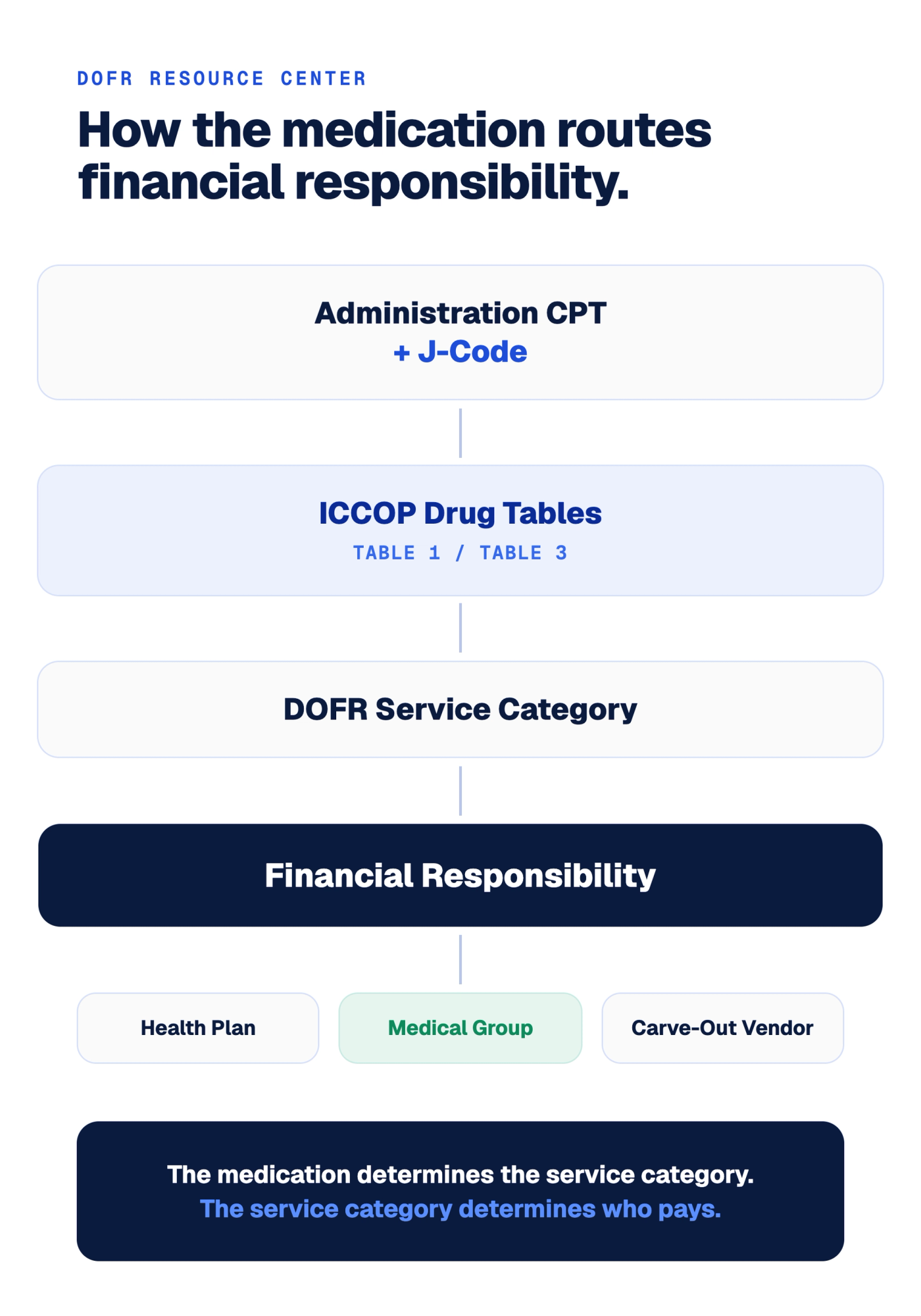
Figure 1: How Drug Tables Determine Financial Responsibility
What Drug Tables Are
Drug tables are payer-published reference documents that map specific drug codes (J-codes, which are a subset of HCPCS Level II codes) to DOFR service categories. They answer a question that the DOFR schedule itself does not answer: which individual medications belong in which service category?
A DOFR schedule might state that "Chemotherapy" is the financial responsibility of the health plan and "Injectable Medications" are the financial responsibility of the medical group. That assignment is clear in principle. But which drugs are "Chemotherapy" and which are "Injectable Medications"? The DOFR schedule does not enumerate every drug. It assigns responsibility at the category level. The drug tables provide the mapping from individual drugs to those categories.
The ICCOP Drug Tables
The most operationally significant drug tables in California delegated risk are published under the Injectable Chemotherapy and Chemotherapy-related Oncology Program (ICCOP). Two tables are central to DOFR classification.
ICCOP Drug Table 1: Chemotherapy Drugs
Table 1 lists the J-codes for drugs classified as chemotherapy agents. If a drug's J-code appears on Table 1, the claim carrying that drug routes to the CHEMOTHERAPY service category, regardless of how it was administered.
Table 1 includes cytotoxic agents, targeted therapies, immunotherapies, and other drugs used in oncology treatment that the payer has classified as chemotherapy for financial responsibility purposes. The list is specific: a drug is either on Table 1 or it is not. There is no ambiguity at the lookup level.
ICCOP Drug Table 3: Injectable Medications
Table 3 lists the J-codes for drugs classified as injectable medications. If a drug's J-code appears on Table 3, the claim routes to the INJECTABLE_MEDICATION service category.
Table 3 covers a broader range of drugs than Table 1: biologics, immunoglobulins, hormonal agents, and other medications administered by injection or infusion that are not classified as chemotherapy.
Where the Tables Sit in the DOFR Architecture
This distinction is critical and often misunderstood: drug tables are not part of the DOFR schedule. The DOFR schedule is a contract exhibit, negotiated between the health plan and the medical group or IPA, and typically amended on a yearly basis aligned with contract renegotiation. Drug tables are supplementary classification instruments published by the payer to operationalize the categories the DOFR schedule defines.
Think of the relationship this way:
The DOFR schedule says: "Chemotherapy is plan risk."
The drug table says: "Here are the drugs that count as chemotherapy."
The schedule defines responsibility at the category level.
The table defines membership at the drug level.
Both are necessary.
Neither is sufficient alone.
This structural separation has an important operational consequence: the DOFR schedule and the drug tables update on different cadences. The schedule changes through contract amendment, typically yearly. The tables change when new drugs enter the market, when biosimilars receive approval, or when the payer reclassifies a medication. Health Net, for example, publishes quarterly crosswalk updates (Q1 through Q4) to its Injectable Medication HCPCS/DOFR Crosswalk. These updates are operational reference table changes, not DOFR schedule amendments.
When operations teams treat the DOFR schedule and the drug tables as a single entity that updates on a single cadence, they miss the fact that the tables may have changed while the schedule stayed the same.
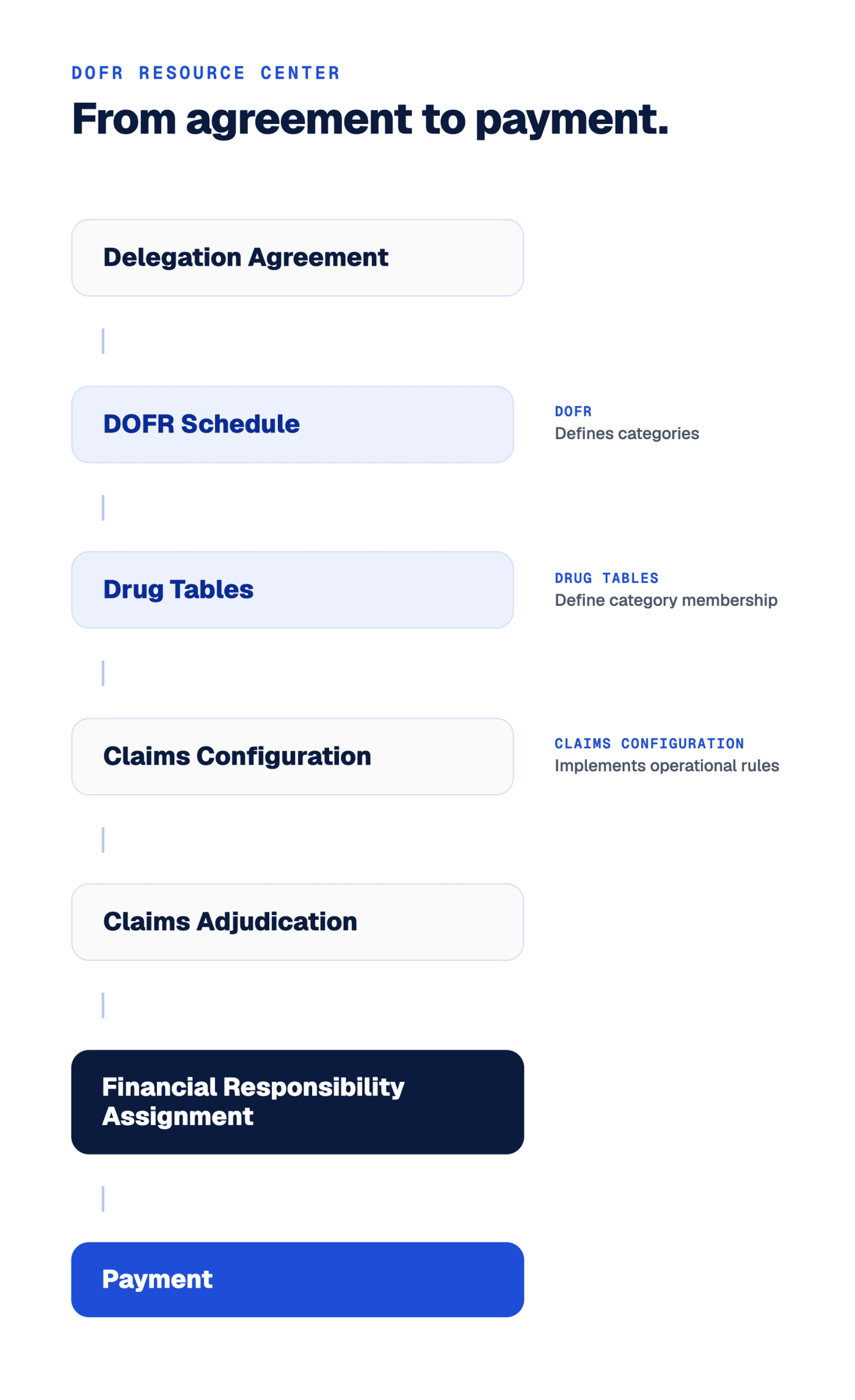
Figure 2: Where Drug Tables Fit Within DOFR Configuration
How Drug Tables Drive Classification: A Step-by-Step Process
When a claim arrives at the claims adjudication system, DOFR classification for drug-related services follows a specific lookup sequence. Understanding this sequence is essential for anyone who configures, audits, or troubleshoots DOFR classification.
Step 1: Identify the Administration Code
The system reads the CPT code on the claim line. For drug administration, common codes include:
CPT Code
Description
96413
Chemotherapy administration, intravenous infusion, first hour
96365
Intravenous infusion, initial, up to 1 hour
96372
Therapeutic, prophylactic, or diagnostic injection, subcutaneous or intramuscular
96374
Therapeutic, prophylactic, or diagnostic injection, intravenous push
The administration code tells the system how the drug was delivered. It does not, by itself, determine the DOFR category. This is where many static configuration setups fail: they route based on the CPT code alone.
Step 2: Identify the Drug Code
The system reads the J-code (HCPCS Level II) on the same claim line or an associated line. The J-code identifies the specific drug administered.
Examples:
J-Code
Drug
Common Use
J9035
Bevacizumab (Avastin)
Oncology (various cancers)
J9271
Pembrolizumab (Keytruda)
Oncology (immunotherapy)
J1756
Iron sucrose (Venofer)
Iron deficiency anemia
J1459
Intravenous immune globulin (IVIG)
Immune disorders
J2505
Pegfilgrastim (Neulasta)
Neutropenia prevention
Step 3: Look Up the J-Code in Drug Table 1
The system checks whether the J-code appears on ICCOP Drug Table 1 (Chemotherapy Drugs).
- If yes: The claim routes to the CHEMOTHERAPY service category. Financial responsibility is assigned according to the DOFR schedule's chemotherapy designation (typically plan risk).
- If no: Proceed to Step 4.
Step 4: Look Up the J-Code in Drug Table 3
If the J-code was not found on Table 1, the system checks whether it appears on ICCOP Drug Table 3 (Injectable Medications).
- If yes: The claim routes to the INJECTABLE_MEDICATION service category. Financial responsibility is assigned according to the DOFR schedule's injectable medication designation (often capitated to the medical group, though this varies by contract).
- If no: The drug is not on either table. The system must apply fallback logic, which may route the claim based on the administration code, the place of service, or other signals. In many configurations, unclassified drugs route to a default category that may or may not be correct.
Step 5: Assign Financial Responsibility
Once the DOFR category is determined, the system looks up the responsible party for that category in the configured DOFR rules.
The Three-Way Model applies:
- Medical group (capitated)
- Health plan (plan risk)
- Third-party vendor (carved out)
The Lookup in Practice
Consider two claims processed on the same day, both with CPT 96413 (chemotherapy administration, IV infusion, first hour).
Claim A
- CPT: 96413
- J-code: J9035 (bevacizumab / Avastin)
- Table 1 lookup: Found. Bevacizumab is on Table 1.
- DOFR category: CHEMOTHERAPY
- Responsible party: Health plan (plan risk)
Claim B
- CPT: 96413
- J-code: J1756 (iron sucrose / Venofer)
- Table 1 lookup: Not found. Iron sucrose is not on Table 1.
- Table 3 lookup: Found. Iron sucrose is on Table 3.
- DOFR category: INJECTABLE_MEDICATION
- Responsible party: Medical group (capitated)
Same CPT.
Same infusion chair.
Same nursing staff.
Different drug.
Different DOFR category.
Different party pays.
A claims examiner reviewing these claims manually would recognize the distinction immediately. But in a system configured to route based on the CPT code alone, both claims would route to the same category. One of them would be wrong. And no denial would be generated.
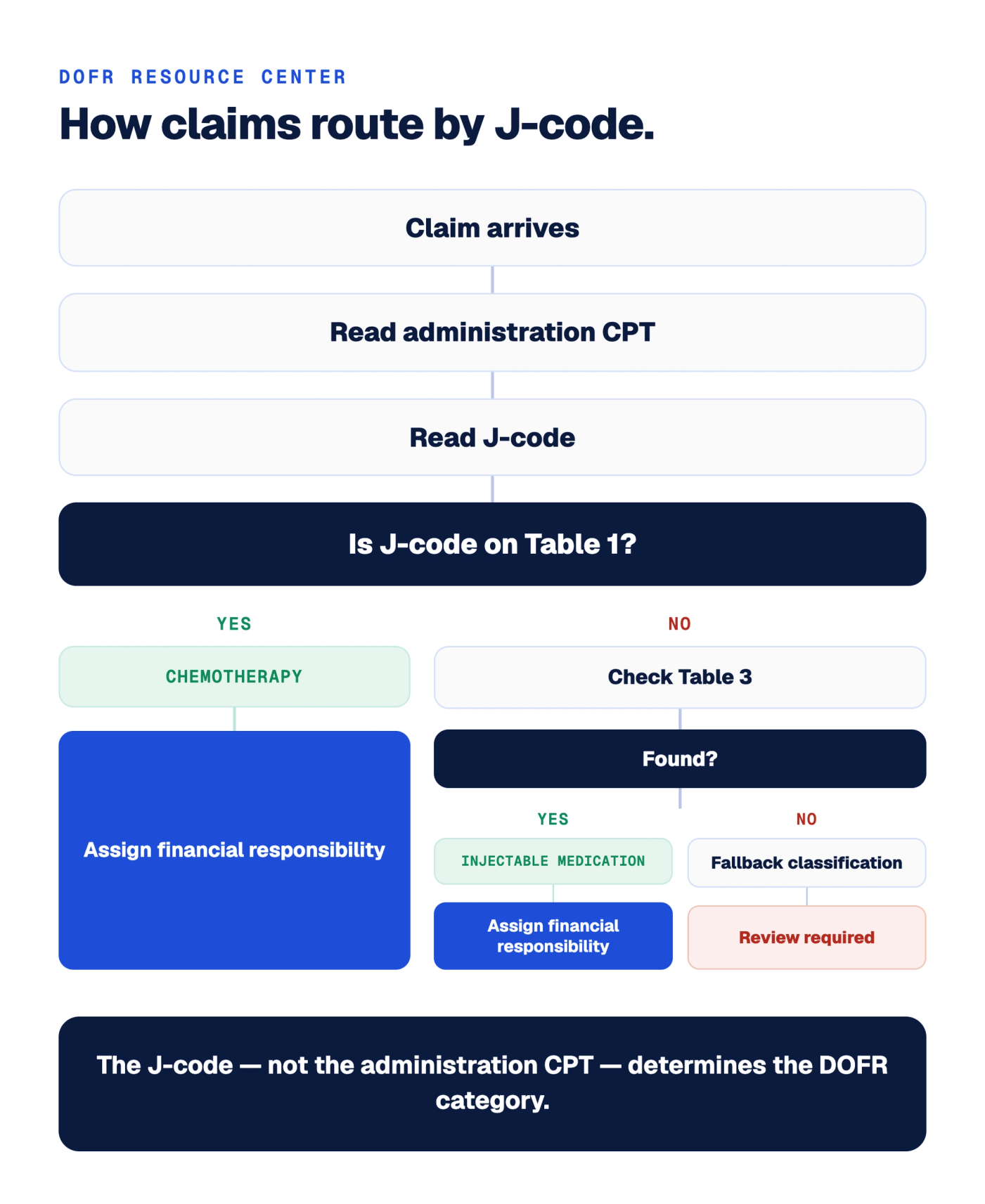
Figure 3: Drug Table Lookup Sequence
Why Drug Tables Change
Drug tables are living documents. They change because the pharmaceutical market changes. Understanding what drives updates, and how frequently they occur, is essential for managing Configuration Drift.
New Drug Approvals
When the FDA approves a new oncology drug, CMS assigns it a J-code. The payer then determines which drug table the new code belongs on.
Until the payer publishes that determination and the operations team loads it into the system, the new drug has no table membership.
Claims carrying the new J-code will not match any table lookup.
Biosimilar Introductions
Biosimilars are particularly important in the drug table context.
When a biosimilar receives FDA approval for a reference biologic that is already on Table 1 or Table 3, the biosimilar needs its own entry on the same table.
The biosimilar has a different J-code than the reference product.
If the table is not updated to include the biosimilar's code, the biosimilar will not match the table lookup even though it is clinically equivalent to a drug that does match.
Example:
Bevacizumab (J9035) is on Table 1 as a chemotherapy agent.
A bevacizumab biosimilar with a different J-code enters the market.
If Table 1 is not updated to include the biosimilar's code, claims for the biosimilar will fail the Table 1 lookup and will not route to CHEMOTHERAPY.
Instead, they will fall through to Table 3, or to the fallback logic, or to a default category.
The financial responsibility assignment changes, and neither party may notice.
Reclassifications
Occasionally, a payer reclassifies a drug from one table to another.
A drug previously categorized as an injectable medication may be reclassified as a chemotherapy agent based on new clinical evidence or updated treatment protocols.
When this happens, every claim carrying that drug's J-code should route to a different DOFR category going forward.
If the system table is not updated, historical routing continues and new claims are classified incorrectly.
Quarterly Crosswalk Updates
Health Net publishes quarterly updates to its Injectable Medication HCPCS/DOFR Crosswalk.
Each update may:
- Add new J-codes
- Remove retired codes
- Reclassify existing codes
These are operational updates, not DOFR schedule amendments.
They do not require contract renegotiation.
But they do require system configuration changes.
The quarterly cadence means that a system configured correctly in January may be outdated by April, not because the DOFR schedule changed, but because the drug tables that operationalize the schedule have been updated and the system has not.
Configuration Drift Through Drug Table Lag
Configuration Drift does not always begin with a DOFR amendment.
Sometimes the contract remains perfectly current while the operational classification tables fall behind. This is one of the most common ways drug-related DOFR errors emerge.
Consider the sequence:
- The payer publishes an updated ICCOP Drug Table.
- The updated table includes newly approved medications, biosimilars, or reclassified drugs.
- The claims adjudication system continues using the previous version of the table.
- New claims begin arriving for drugs that do not exist in the outdated configuration.
- The claims system applies fallback logic or default routing.
- Financial responsibility is assigned incorrectly.
- Claims process successfully.
- No denial is generated.
- No operational alert is triggered.
- The error remains invisible until reconciliation.
Nothing in this sequence represents a failure of claims adjudication.
The system is functioning exactly as configured.
The problem is that the configuration no longer reflects the payer's current operational classification rules.
This is Configuration Drift.
Unlike a traditional claims processing error, there is no rejected claim, suspended work queue, or exception report to investigate. Every claim adjudicates successfully. The only thing that changes is which organization ultimately absorbs the financial responsibility.
That is why drug table maintenance is a Configuration Governance responsibility, not simply a coding or reference-table maintenance activity.
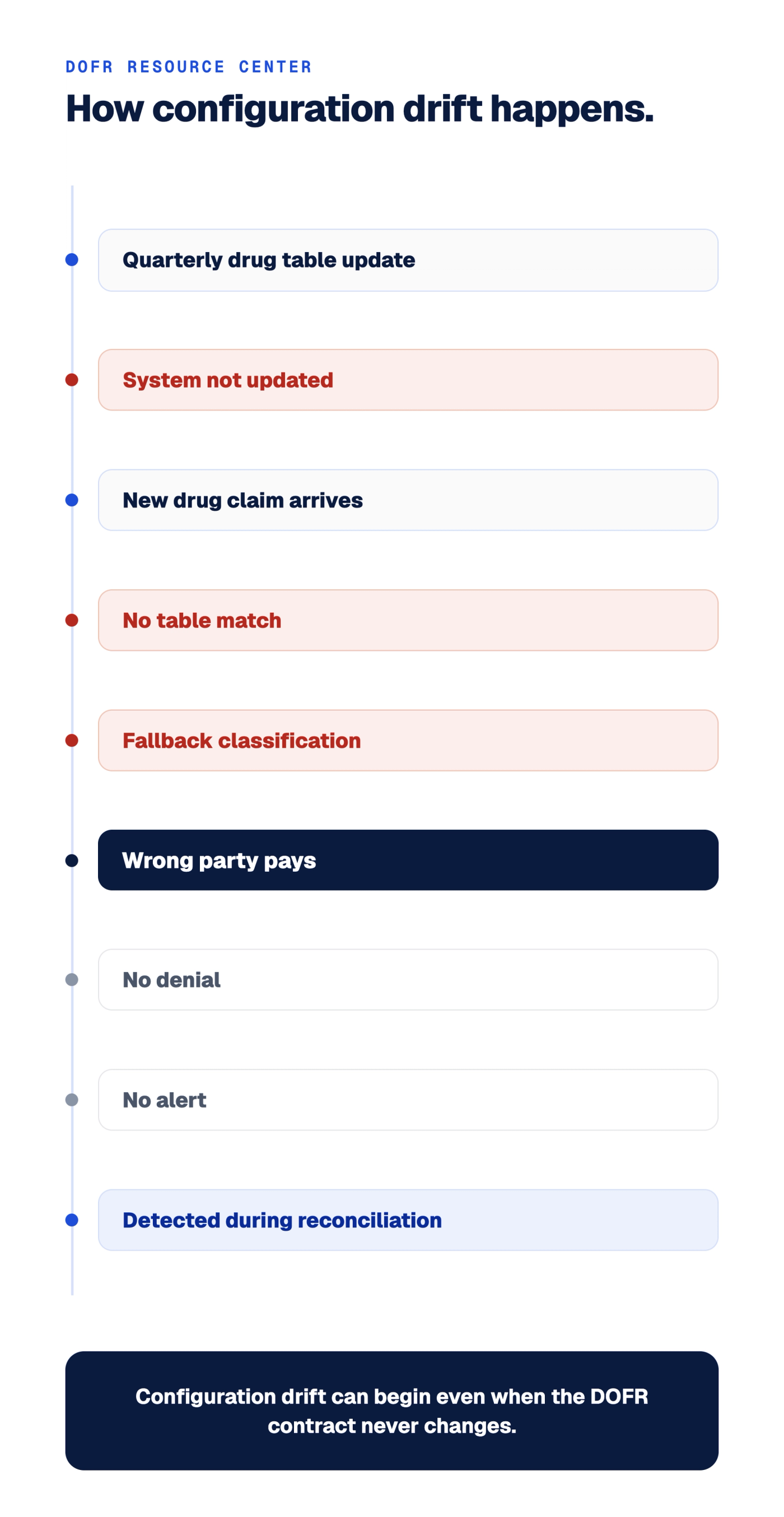
Figure 4: Configuration Drift Through Drug Table Lag
The J9999 Problem
Not every medication has an established J-code immediately.
Newly introduced drugs are frequently billed using miscellaneous or unclassified HCPCS codes such as J9999 until CMS assigns a permanent code.
Operationally, this creates a temporary classification challenge.
Without a permanent J-code:
- the medication cannot appear on ICCOP Drug Table 1,
- it cannot appear on ICCOP Drug Table 3,
- and automated lookup cannot determine the appropriate DOFR category.
Organizations typically address these situations through temporary exception tables, manual routing rules, or payer-issued operational guidance until permanent coding is available.
These interim workflows illustrate why static configuration is insufficient for delegated risk. Drug classification is not a one-time implementation exercise; it requires continuous operational maintenance as new medications enter the market.
Resolving the Three Drug-Related High-Ambiguity Pairs
Publication 7 introduced the six High-Ambiguity Categories.
Three of those pairs are primarily resolved through drug table lookups rather than procedure-code interpretation.
1. Chemotherapy vs. Infusion Services
Both categories commonly use infusion administration CPT codes.
The determining factor is not the administration procedure.
The determining factor is whether the administered medication appears on the chemotherapy drug table.
If it does, the claim belongs in the CHEMOTHERAPY category.
If it does not, the claim may belong in INFUSION_SERVICES depending on the medication and applicable contract rules.
2. Chemotherapy vs. Injectable Medication
Many injectable medications are administered using workflows that appear clinically similar to chemotherapy administration.
Operationally, however, they belong to different financial responsibility categories.
Drug table membership determines the distinction.
A medication listed on ICCOP Table 1 routes to CHEMOTHERAPY.
A medication listed on ICCOP Table 3 routes to INJECTABLE_MEDICATION.
The administration code alone cannot make this determination.
3. Infusion Services vs. Injectable Medication
This distinction often requires evaluating both the administered drug and the applicable payer classification tables.
Some infused medications are classified as injectable medications for DOFR purposes.
Others remain infusion services.
Again, the payer-maintained drug tables, not the administration CPT code, determine the operational category.
This is why the Classification Signal Hierarchy gives greater weight to the drug than to the administration procedure.
Across all three ambiguity pairs, the same operational principle applies:
The drug determines the category.
The administration code explains how the medication was delivered.
The drug identifies what was delivered.
Financial responsibility follows what, not how.
Practical Verification Steps
Drug tables require the same operational discipline as every other component of DOFR configuration. Organizations that verify only the DOFR schedule while ignoring the supporting classification tables leave a significant source of Configuration Drift unaddressed.
Claims operations teams should incorporate the following practices into their governance process:
- Verify that the production claims adjudication system reflects the current payer-published drug tables.
- Compare newly published quarterly drug table updates against the production configuration before they are implemented.
- Confirm that newly approved drugs and biosimilars have been added to the appropriate classification tables.
- Review temporary routing rules established for miscellaneous HCPCS codes such as J9999 and retire them once permanent J-codes become available.
- Document the version of each payer drug table currently loaded into production.
- Include drug table verification as part of every recurring DOFR configuration review.
Organizations frequently validate that the DOFR schedule itself has been updated after a contract amendment.
Fewer organizations verify that the operational reference tables supporting that schedule have also been updated.
Both are required to maintain Configuration Fidelity.
Key Takeaways
Drug tables are one of the least visible, but most operationally important, components of delegated financial responsibility.
They serve as the operational translation layer between individual medications and the financial responsibility categories defined by the DOFR schedule.
They explain why two claims with the same administration CPT code can legitimately route to different financially responsible parties.
They update independently of the DOFR schedule itself.
And when they are not maintained, they create Configuration Drift without generating denials, alerts, or operational visibility.
Understanding drug tables is therefore not simply a coding exercise.
It is a core component of Configuration Governance.
Organizations that treat payer-published drug tables as living operational assets are far better positioned to maintain Configuration Fidelity and reduce Wrong-Party Payments over time.
Continue Learning
If you found this article helpful, continue exploring delegated financial responsibility with these related publications:
Foundations
- Understanding Division of Financial Responsibility (DOFR): The Complete Guide
https://www.gabeo.ai/dofr/articles/what-is-a-dofr-the-complete-guide - The Three-Way Model of Financial Responsibility in Delegated Risk
https://www.gabeo.ai/dofr/articles/the-three-way-model-financial-responsibility-in-delegated-risk
Configuration Governance
- Why Static DOFR Configuration Eventually Fails
https://www.gabeo.ai/dofr/articles/why-static-dofr-configuration-eventually-fails - Configuration Fidelity: Verifying Operational Rules Match the Contract
https://www.gabeo.ai/dofr/articles/configuration-fidelity-dofr-rules-match-contract - Configuration Debt in Delegated Risk Operations
https://www.gabeo.ai/dofr/articles/configuration-debt-delegated-risk-operations - The Delegation Oversight Blind Spot: DOFR Configuration Accuracy
https://www.gabeo.ai/dofr/articles/delegation-oversight-blind-spot-dofr-configuration-accuracy
Claims Operations
- Why Six Service Categories Generate Most DOFR Misclassification Errors
https://www.gabeo.ai/dofr/articles/why-six-service-categories-generate-most-dofr-misclassification-errors - Why DOFR Errors Don't Generate Denials
https://www.gabeo.ai/dofr/articles/why-dofr-errors-dont-generate-denials - The DOFR Glossary: The Complete Reference for Delegated Risk Terminology
https://www.gabeo.ai/dofr/articles/dofr-glossary-delegated-risk-terminology